All Chemistry Paper II papers
CSS past paper
CSS Chemistry Paper II Past Paper 2019
CSS Chemistry Paper II 2019 carries 100 marks over 3 hours. It has 7 questions.
- Marks
- 100
- Time
- 3 hours
- Questions
- 7
How to attempt: Attempt ONLY FOUR questions from PART-II. ALL questions carry EQUAL marks.
Questions
Question 1 (Part I) is the paper's MCQs, which are not reproduced here.
- Q. 2(20)
- (a)Elaborate the optical isomerism with appropriate examples.(10)
- (b)Express the resolution and its applications.(5)
- (c)Explain the geometric isomerism in cyclic compounds.(5)
- Q. 3(20)
- (a)Prepare a plausible synthesis for each of the following transformation:(12)
- (A)

- (B)
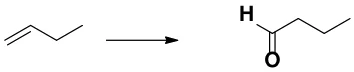
- (C)
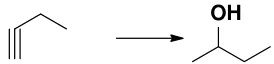
- (D)

- (E)
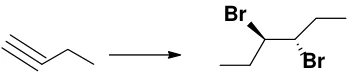
- (F)
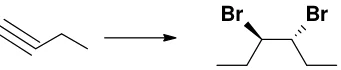
- (b)Explain the type of hybridization in 1,3-Butadiene.(4)
- (c)Mention any three methods for preparation of Alkynes.(4)
- Q. 4(20)
- (a)Describe the necessary conditions and reagents required to convert benzene into the following. Nitrobenzene, Ethyl benzene, cyclohexane, Benz-aldehyde, Benzoic acid, and Chlorobenzene.(8)
- (b)Draw all possible structures of aromatic compounds with the formula containing the benzene ring.(6)
- (c)How do you account for the fact that phenol is more easily attacked by electrophiles than nitrobenzene?(6)
- Q. 5(20)
- (a)Outline stepwise reaction mechanism for the following reactions:(8)
- (i)SN1 reaction between bromoethane and NaOH.
- (ii)SN2 reaction between 2-chloro-2-methyl propane and NaCN.
- (b)Discuss the various factors, nature of substrate, solvent, catalyst, and the leaving group in SN2 reaction.(8)
- (c)How does methyl iodide react with the following reagents? Acetic acid, Mg, Alcoholic KOH and Na.(4)
- Q. 6(20)
- (a)Describe two methods for preparation of salicylic acid? How would you convert it into (a) Phenol, (b) Salol, (c) Benzoic acid and (d) Aspirin? Give its at least two medicinal uses.(10)
- (b)How will you obtain the following from suitable mono carboxylic acid? (a) Iso-butane (b) Butanone (c) Benzamide (d) Propionaldehyde.(6)
- (c)Describe the mechanism of esterification of an acid.(4)
- Q. 7(20)
- (a)An unknown substance shows a molecular ion peak at m/z=170 with a relative intensity of 100.The M+1 peak has relative intensity of 13.2 and the M+2 peak has an intensity of 1.00. What is the molecular formula for this substance?(10)
- (b)Mention the various tools to interpret the mass spectra.(5)
- (c)What is the nitrogen rule? Explain it with suitable examples.(5)
- Q. 8(20)
- (a)Elucidate the various steps involved in Glycolysis.(12)
- (b)Express the role of ATP in Glycolysis.(4)
- (c)Describe the pathway that leads to the formation of Lactic acid.(4)
- Part-II is to be attempted on the separate Answer Book.
- Attempt ONLY FOUR questions from PART-II. ALL questions carry EQUAL marks.
- All the parts (if any) of each Question must be attempted at one place instead of at different places.
- Write Q. No. in the Answer Book in accordance with Q. No. in the Q.Paper.
- No Page/Space be left blank between the answers. All the blank pages of Answer Book must be crossed.
- Extra attempt of any question or any part of the question will not be considered.
- Use of Calculator is allowed.