All Chemistry Paper II papers
CSS past paper
CSS Chemistry Paper II Past Paper 2016
CSS Chemistry Paper II 2016 carries 100 marks over 3 hours. It has 7 questions.
- Marks
- 100
- Time
- 3 hours
- Questions
- 7
How to attempt: Attempt ONLY FOUR questions from PART-II. ALL questions carry EQUAL marks.
Questions
Question 1 (Part I) is the paper's MCQs, which are not reproduced here.
- Q. 2Write briefly on the following terms: (2 each)(20)
- (i)Hyper-conjugation
- (ii)Aromaticity
- (iii)Grignard’s reagent
- (iv)reaction
- (v)Molecular chirality
- (vi)Monosaccharides
- (vii)Chemical shift
- (viii)Glycolysis
- (ix)Detergents
- (x)Friedal Craft alkylation
- Q. 3
- (a)How would you synthesize each of the following molecule from an alkene of appropriate structure (structure of your choice).(8)
- (i)
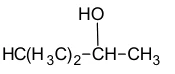
- (ii)
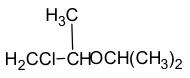
- (iii)
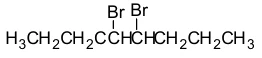
- (iv)
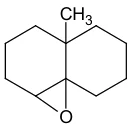
- (b)Write the expected major product of the reaction of propyne with each of the following reagents.(6)
- (i), , pyridine
- (ii)Na,
- (iii)then
- (iv), ,
- (v)Di-isoamylborane, then NaOH,
- (vi)Di-isoamylborane, then
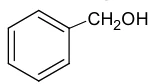
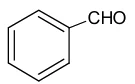
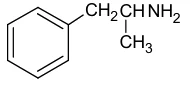
- (c)Starting with benzene, design reasonable syntheses of each of the following compounds.(6)
- (i)
- (ii)
- (iii)
- Q. 4
- (b)Draw the structures of the following molecules:(10)
- (i)5-(2,2-Dimethylpropyl)nonane
- (ii)2,3-Dimethylhept-3-ene
- (iii)1-Chloro-1-methoxy-2-methylbut-1-ene
- (iv)6-Chloro-2-nitrooct-1-en-3-yne
- (v)8-Chloro-7-methoxy-5-methyl-4-nitroundec-5-ene
- (vi)4-(2-Ethylbutyl)decane
- (vii)5-Ethyl-4,6-dimethylhept-4-en-2-yne
- (viii)5,5-Dichloro-3-methylhepta-3,6-dien-1-yne
- (ix)6-bromo-5-chloro-9-nitropentadecane
- (x)6-chloroocta-1,3-diyne
- (c)
- (i)The structure(I) given below has significant dipole moment. Which end of the molecule would you expect to owe positive charge, and which tend to be negative.(2)
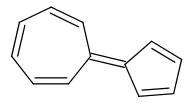
(I) - (ii)The structure(II) given below is a component of certain oral contraceptives:(3)
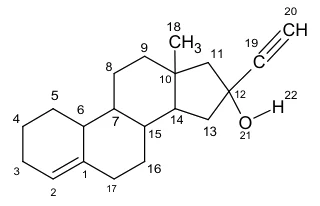
(II) Locate in this structure an example of each of the following bonds or atoms
➢ A highly polarized covalent bond
➢ Sp-hybrid carbon atoms
➢ A nearly unpolarized covalent bond
- Q. 5
- (a)Consider the reaction of bromocyclohexane with each of the four reagents below, and answer the questions below. Also write down the reaction mechanism in each case.(7)
(i) (ii) (iii) (vi) - (i)What is the most important type of reaction mechanism in each case?
- (ii)Which reagent gives the most elimination product?
- (iii)Which reagent is most useful in synthesizing the alcohol?
- (b)Evaluate each of the possible alcohol syntheses below as being good (the desired alcohol is major or only product), not so good (the desired alcohol is a minor product, or worthless).(5)
- (i)
- (ii)
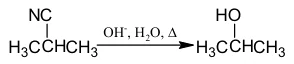
- (iii)
- (iv)

- (v)
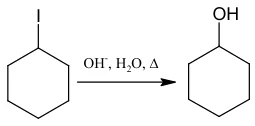
- (c)Write the major product(s) of each of the following reactions. It is implied that aqueous work-up has taken place in all those cases that require it to obtain the organic product.(8)
- (i)
- (ii)
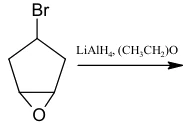
- (iii)
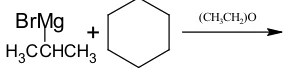
- (iv)
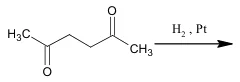
- Q. 6
- (a)The two isomers of carvone are given below. Which is R and which is S?(2)
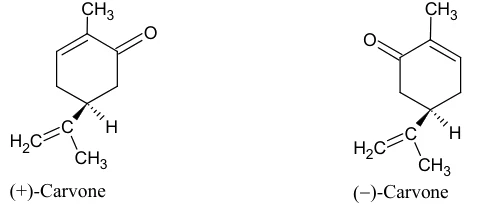
- (b)The structure of compound given below is a sugar called (−)-arabinose. Its specific rotation is −105˚.(3)
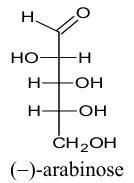
- (i)Draw enantiomer(s) of (−)-arabinose
- (ii)Draw diastereomer(s) of (−)-arabinose
- (iii)Does (−)-arabinose have any optically inactive diastereomers? If it does, draw one.
- (c)Assign E,Z designation to the following structures.(7)
- (i)
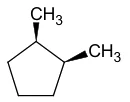
- (ii)
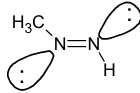
- (iii)
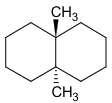
- (iv)
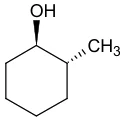
- (v)
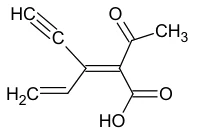
- (vi)
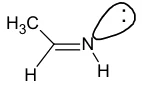
- (vii)
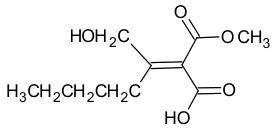
- (d)Draw the structures of the product(s) described for each reaction. Specify all aspects of the stereochemistry.(8)
- (i)Stereospecific anti addition of bromine to cis- and trans-cinnamic acid.
- (ii)Methanolysis of S-3-bromooctane with 6% racemization.
- (iii)Stereospecific syn thermal elimination of acetic acid from 1R,2S-diphenylpropyl acetate
- (iv)Stereoselective epoxidation of bicyclo[2.2.1]hept-2-ene proceeding 94% fromtheexo face.
- Q. 7Write a brief account on the following: (5 each)(20)
- (a)Biological importance of starch
- (b)Classification of Amino acids
- (c)Primary structure of Proteins
- (d)Glycogenesis
- Q. 8
- (a)Differentiate following using IR Spectroscopy?(4)
- (i)

- (ii)

- (iii)

- (iv)
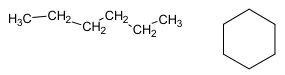
- (b)What type of electronic transition are possible in the following compounds?(2)
- (i)Butadiene
- (ii)Diethyl ether
- (iii)Acetaldehyde
- (iv)Trimethylamine
- (c)How will you distinguish the following compounds using UV/Visible spectrophotometer?(4)
- (i)
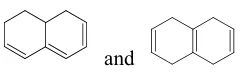
- (ii)
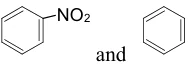
- (iii)
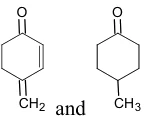
- (iv)
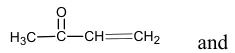
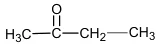
- (d)Give the chemical shift of the following compounds for each proton(5)
- (i)
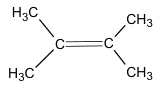
- (ii)
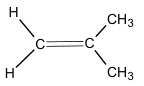
- (iii)
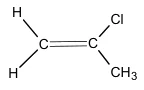
- (iv)
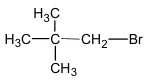
- (v)

- (e)The mass spectrum of compound shows following peaks: m/e= 120, relative intensity=20% ( peak), m/e= 105, relative intensity=80%, m/e= 77, relative intensity=96%, m/e= 43, relative intensity=35%. Assign the structure which would be expected.(5)
- Part-II is to be attempted on the separate Answer Book.
- Attempt ONLY FOUR questions from PART-II. ALL questions carry EQUAL marks.
- All the parts (if any) of each Question must be attempted at one place instead of at different places.
- Candidate must write Q. No. in the Answer Book in accordance with Q. No. in the Q.Paper.
- No Page/Space be left blank between the answers. All the blank pages of Answer Book must be crossed.
- Extra attempt of any question or any part of the attempted question will not be considered.
- Use of Calculator is allowed.